1: What priorities do participants identify at enrollment, how do these priorities evolve, and how do participants describe their progress on what matters most to them?
This study will capture the goals and priorities participants articulate at baseline and track how these priority portfolios persist, shift, or resolve throughout the payment period. We will document what participants report about progress on their priorities, what they say helped or hindered that progress, and why priorities enter or exit their focus. We will also examine how shifts in personal circumstances (family health, job loss) or changing ambitions intersect with the cash to shape priority evolution. These insights reveal whether participants' experiences with the monthly cash primarily reflect stabilizing urgent needs or also pursuing longer-term goals and mobility, and what additional supports could widen those pathways.
2: What structural, relational, and personal barriers to economic stability do participants report at enrollment, and how do these barriers evolve over the course of the program?
This study will identify the everyday barriers—such as transportation gaps, childcare shortages, health issues, lack of job opportunities, debt burdens, caregiving responsibilities—that participants believe keep them from financial stability or security, and track whether those constraints lessen, intensify, or change form during the cash transfer period. We will document the breadth and depth of barriers participants face across major life domains. Longitudinal tracking shows whether and how participants' barrier profiles change over time and what role extra cash may play in those shifts.
3: What informal networks, community resources, and public programs do participants rely on, and how do participants describe the role of cash alongside other supports?
This study will map the informal support systems, community resources, and public programs that participants draw on at enrollment and throughout the program. We will describe patterns in social network composition, types of support people can access, community resource utilization, public program participation, and barriers to accessing supports. Given that cash does not function in isolation, understanding the broader support ecosystem provides essential context for participants' experiences while receiving the cash payments.
4: How do participants describe using the monthly cash payments, and what changes (if any) do they report in household financial well-being, material conditions, and other domains of their lives?
This study will explore how participants describe using the monthly payments and examine what changes they experience in material hardship, financial stability, work, housing, health, and other life domains. We will track trajectories in standardized measurable outcomes alongside participants' self-reported priority progress and domain experiences to provide insight into whether and how these areas change while receiving monthly cash payments.
5: How do participants describe changes in psychological well‑being, stress levels, and future outlook while receiving the cash payments?
This study will explore participants' subjective experiences of receiving cash transfers, focusing on stress, mental health, and future optimism. These psychological dimensions capture important aspects of participants' experiences with cash assistance that may relate to patterns in other domains and that purely material measures might miss.
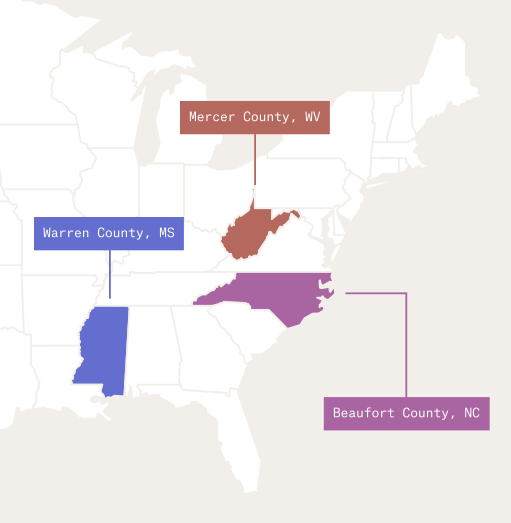
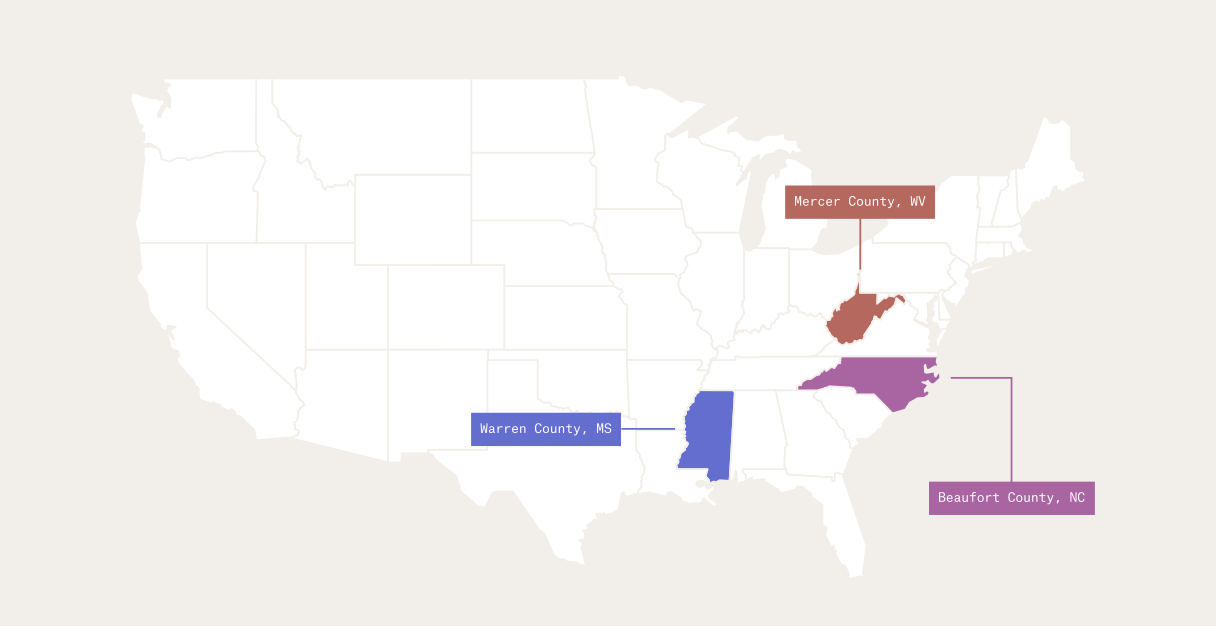
6: How do county-level economic, institutional, and social characteristics shape participants' experiences across research questions 1-5?
This study will examine how local economic conditions, institutional capacity, service availability, and social characteristics relate to participants' experiences across the research domains. Primarily through ethnographic work, we will explore how place-based context matters for understanding participants' experiences. Rural America is not monolithic; place shapes opportunity and constraint. The same cash transfer may function differently where jobs and services are accessible versus where structural gaps are wider. Documenting geographic differences helps us understand the role of local context and avoid assuming one-size-fits-all conclusions. Accounting for county context prevents conflating "what happened" with "where people live" and yields actionable intelligence on place-based facilitators and bottlenecks.